
Colombian Coffee as a Strategic Commodity on the Global Market
Colombian coffee has consolidated its position as one of the most valuable agricultural assets in the global soft commodities market. With an annual production of over 14 million bags, Colombia maintains its relevance as the world's third largest producer of Arabica coffee, a commodity that is actively traded on the ICE and NYSE futures and options markets.
The distinctive quality of Colombian Arabica coffee, grown at altitudes ranging between 1,200 and 2,000 meters, generates a consistent premium in international markets. This differentiation is reflected in futures contracts, where Colombian coffee frequently trades with a favorable spread against the Arabica benchmark, particularly in times of tension in the supply curve.
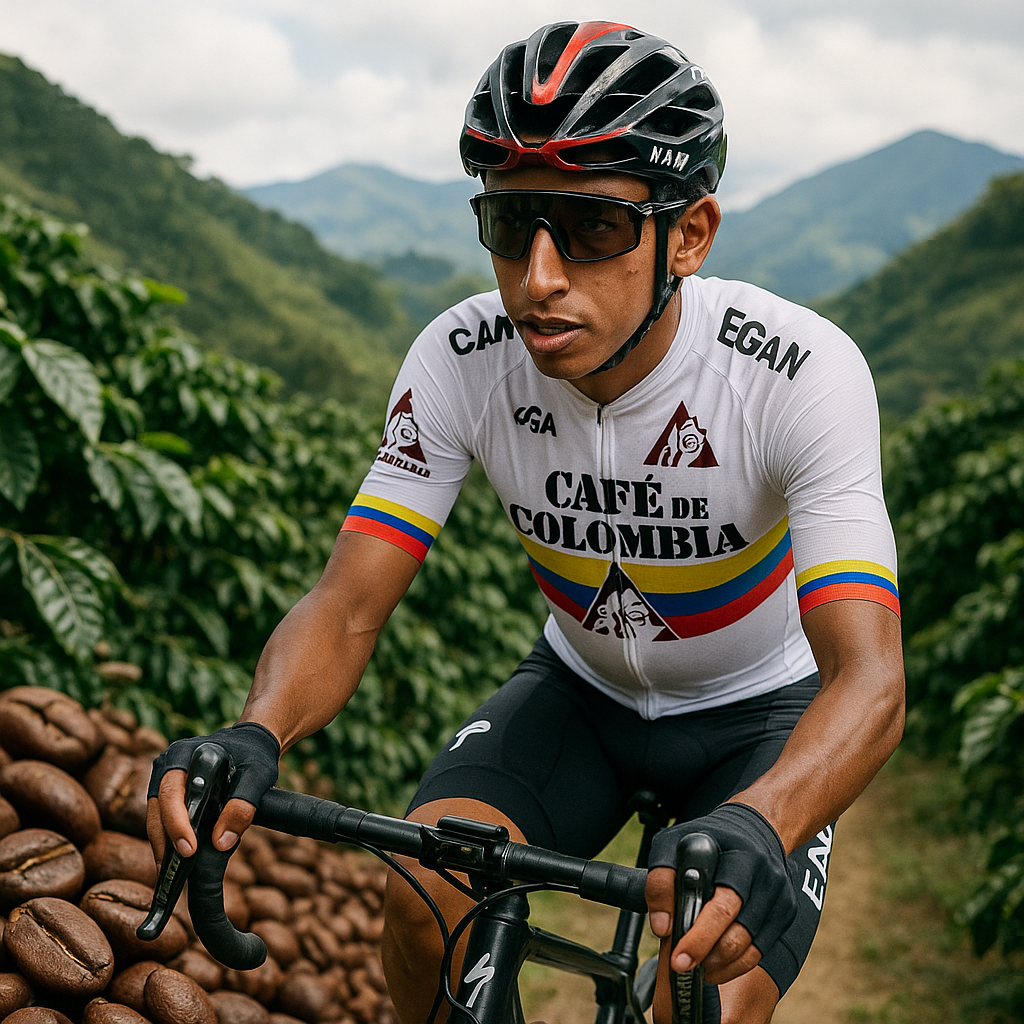
The return of the "Café de Colombia" sponsorship to the professional cycling World Tour represents a strategic brand positioning movement that transcends the sporting aspect. This type of global media visibility has direct implications in the perception of the value of the commodity, reinforcing the identity of origin and the quality premium in an increasingly competitive market, where institutional buyers and risk managers evaluate not only production fundamentals, but also brand recognition and traceability factors.
Commercial Implications of the Return of an Iconic Brand to the Global Stage
The return of "Café de Colombia" to the World Tour peloton, linked to the figure of Egan Bernal, generates a multiplier effect in the valorization of the country's brand. This institutional marketing strategy, led by the National Federation of Coffee Growers, seeks to capture share of mind in key markets such as Europe, the United States and Asia, where competition with origins such as Brazil, Vietnam and Ethiopia is intensifying.
From a trading perspective, this type of initiative has an impact on the structure of premiums and discounts that importers and roasters are willing to pay. Positioning and sentiment analyses in the physical market show that brand differentiation can translate into additional margins of 10 to 25 cents per pound on bilateral contracts, especially in premium and specialty segments.
For market participants -from hedgers to speculators- the strengthening of the Colombia brand represents a sign of institutional stability and sector commitment. This qualitative factor complements the fundamental analysis of supply and demand, and can influence the behavior of spreads between contracts of different origins, as well as the implied volatility of options on Arabica coffee.
The Connection Between Sports Visibility and Agricultural Asset Appreciation
The association between high performance sports and agricultural commodities is not new, but its effectiveness as an asset valuation tool has been documented in several sectoral marketing studies. In the case of Colombian coffee, cycling functions as a vehicle of communication towards audiences with high purchasing power in developed markets, precisely the segments where the consumption of single origin coffees and quality certifications are concentrated.
The media exposure of a World Tour team is measured in millions of spectators during the Grand Tours and European Classics. For a commodity such as coffee, this visibility translates into top-of-mind awareness among institutional buyers, professional tasters and end consumers willing to pay premiums for quality and traceability. The effect is particularly relevant in a context where sustainability, verifiable origin and fair trade practices are increasingly influencing procurement decisions.
From a risk management perspective, brand strength acts as a qualitative hedge against price volatility. Producers and exporters that manage to position their coffee under recognized brands experience less sensitivity to speculative fluctuations in the futures market, allowing for more stable pricing strategies and forward contracts with better terms. This relative stability is an intangible but quantifiable asset in the structuring of agricultural commodity portfolios.
Analysis of the Coffee Market and Soft Commodities Trading Opportunities
The coffee market is in a moment of structural transition. Arabica coffee futures contracts (KC) on ICE have experienced high volatility in recent quarters, driven by climatic phenomena in Brazil, logistical disruptions and changes in post-pandemic demand patterns. In this context, Colombian coffee, with its stable production profile and consistent quality, offers trading opportunities based on quality arbitrage and geographical spreads.
Traders and institutional investors are paying more attention to the spreads between origins. While Robusta coffee is experiencing supply pressures due to export restrictions in Vietnam, Colombian Arabica maintains more predictable trade flows. This dynamic creates opportunities in spread trading strategies, where long positions in Colombian coffee differentials can be hedged against short positions in the benchmark contract, capturing the quality premium.
The structure of the coffee futures curve has alternated between backwardation and contango over the last year, reflecting the tension between tight inventories and harvest expectations. For risk managers and portfolio managers, Colombian coffee represents a diversification option within the soft commodity segment, with imperfect correlations to other agricultural assets such as sugar or cocoa, which improves the efficiency of multi-commodity portfolios.
Trading signals derived from hedge fund positioning, measured through COT (Commitments of Traders) reports, show that net long interest in Arabica coffee has moderated recently. This reduction in speculative positioning, combined with relatively solid Colombian coffee fundamentals, suggests a favorable environment for accumulation strategies with a medium to long term horizon, especially for hedgers seeking to secure supply at competitive prices.
Risk Management and Strategic Positioning in the Coffee Market
Risk management in the coffee market requires a multidimensional approach that integrates analysis of fundamentals, monitoring of market positioning and evaluation of qualitative factors such as reputation of origin. For institutional participants -from hedge funds to multinational corporations- Colombian coffee offers specific advantages in terms of supply chain risk mitigation and quality predictability.
Effective hedging strategies in coffee must consider not only exposure to the commodity price itself, but also the risks associated with exchange rate, particularly the BRL/USD pair given Brazil's weight in the global market. Colombia, with a lower correlation between production and extreme exchange rate fluctuations compared to Brazil, can function as a natural diversifier in the procurement portfolios of international roasters and distributors.
The use of derivative instruments such as options on coffee futures allows traders to build asymmetric positions that capitalize on volatility without assuming full directional risk. In a context where the return of "Colombian Coffee" to the world stage reinforces the perception of quality, out-of-the-money call options on Colombian coffee spreads can offer attractive risk-return profiles, especially in periods of climatic uncertainty in other origins.
For the procurement managers and risk managers of importing and processing companies, the combination of physical forward contracts with hedges in futures markets allows securing operating margins in the face of adverse price movements. The media visibility of Colombian coffee and the strengthening of its brand identity facilitate the negotiation of more favorable contractual terms, reducing the need for aggressive hedging and allowing more efficient rolling hedges strategies in terms of transaction costs.
The macro strategy analysis linked to coffee should incorporate factors such as central bank monetary policies, inflationary expectations and emerging market dynamics, given that coffee is both a consumer commodity and a financial asset subject to speculative flows. The institutional solidity of the Colombian coffee sector and its capacity to project a brand image through initiatives such as elite sports sponsorship strengthen the country risk profile perceived by investors, with positive effects on financing spreads and access to capital markets for the sector.