

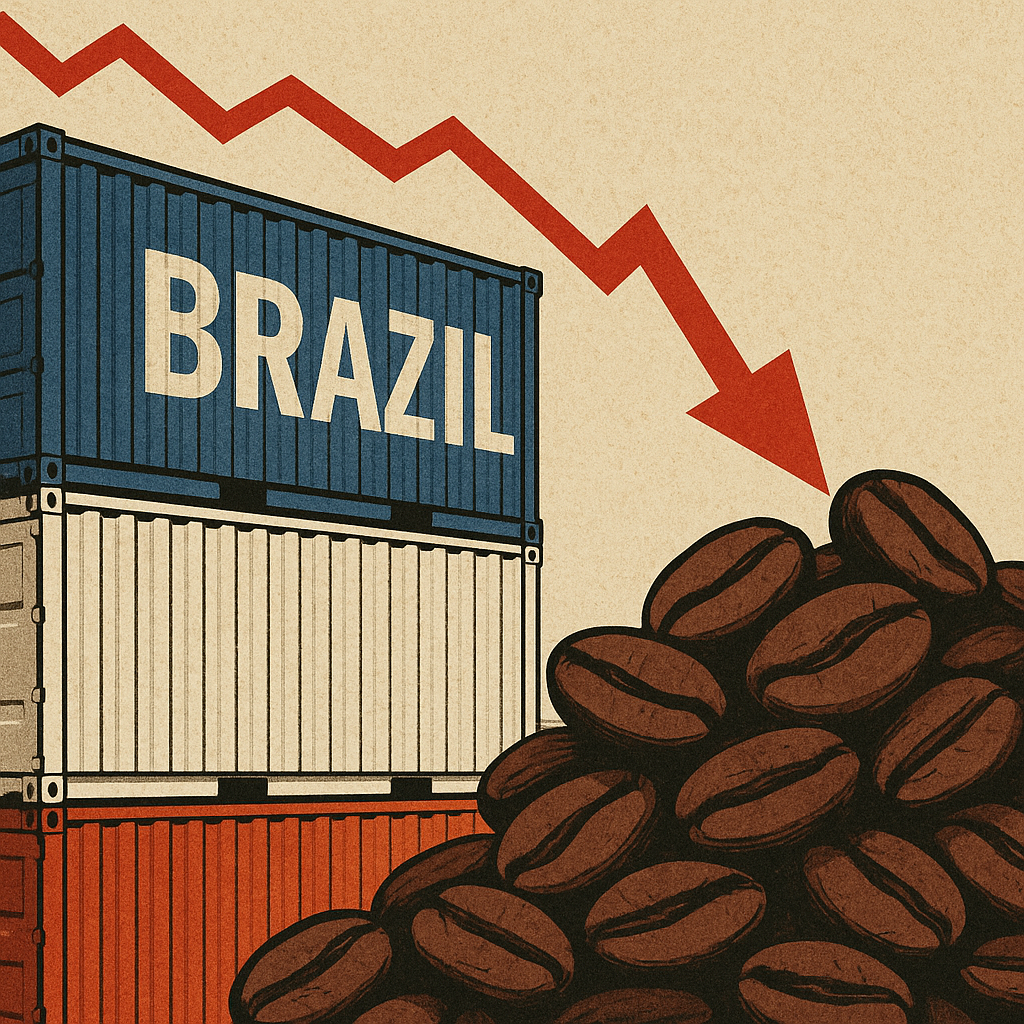
Brazil as the epicenter of the global Arabica coffee market
Brazil represents approximately 40% of world coffee production and more than 50% of global arabica coffee exports, consolidating its position as the dominant player in the international price structure. The geographic concentration of supply in the regions of Minas Gerais, São Paulo and Espírito Santo creates a systemic dependence in global supply chains, where any disruption in Brazilian production generates immediate shock waves in futures markets and physical contracts.
The 20% drop in Brazilian exports during the first quarter represents a significant contraction in the flow of beans available to international roasters and distributors. This reduction not only affects physical volumes, but also distorts the structure of the forward curve, creating backwardation situations that reflect immediate supply shortages. For traders with long positions in Arabica futures, this dynamic implies urgent adjustments in hedging strategies and inventory management.
Brazilian dominance in the global market is not only limited to volume, but also to the quality and variety of Arabica beans that define industry standards. The Bourbon, Catuaí and Mundo Novo varieties grown in Brazil set the benchmarks for ICE contracts and determine regional price differentials. This structural position makes any Brazilian supply shock a systemic risk event that requires continuous monitoring and positioning analysis in COT reports.
Structural factors behind the drop in Brazilian exports
The reduction in Brazilian exports responds to a combination of climatic factors, biennial production cycles and macroeconomic dynamics that have converged during the first quarter. Prolonged drought conditions in the main producing regions during the critical flowering phase have directly impacted yields per hectare, reducing the availability of grain for export. Simultaneously, Brazil is going through the 'off' year of its natural biennial cycle, which had already projected a smaller crop prior to the adverse weather events.
The volatility of the Brazilian real (BRL) against the U.S. dollar adds an additional layer of complexity to export decisions. During periods of BRL appreciation, Brazilian producers face reduced incentives to export, preferring to retain inventories in anticipation of more favorable exchange rate conditions. This domestic withholding dynamic exacerbates shortages in international markets and amplifies price movements in futures contracts, creating opportunities for speculators but risks for commercial hedgers.
Rising fertilizer and energy costs, linked to global geopolitical disruptions, have put pressure on Brazilian producers' margins, encouraging the reduction of cultivated areas and the deferral of investments in the renovation of coffee plantations. This structural disinvestment has medium-term implications on the country's productive capacity, suggesting that the current contraction in exports could extend beyond a temporary shock, consolidating itself as a persistent supply restriction that operators should incorporate in their valuation models and positioning strategies.
Vulnerabilities in Starbucks' supply chain to supply shocks
Starbucks maintains a supply structure highly dependent on high quality Arabica coffee, with long-term contracts linking the company to producers in Brazil, Colombia and Central America. The decline in Brazilian exports exposes critical vulnerabilities in this structure, particularly in the ability to meet quality and volume specifications during periods of scarcity. Forward purchasing operations that traditionally provide 12-18 month supply visibility face pressure when physical availability contracts abruptly.
Starbucks' strategy of maintaining relatively limited inventories to optimize working capital amplifies its exposure to supply disruptions. Unlike roasters with greater vertical integration or strategic warehousing, Starbucks operates a just-in-time model that prioritizes product freshness but sacrifices resilience to shocks. When Brazilian exports fall 20%, the company must turn to alternative suppliers at high spot prices or accept origin substitutions that may compromise the consistency of the flavor profile that defines its value proposition.
Starbucks' financial exposure to coffee price volatility is managed through hedging programs using arabica futures and options, but the effectiveness of these instruments depends on the correlation between standardized contracts and specific physical quality and origin differentials. During situations of extreme backwardation or dislocation between physical and paper markets, hedges may provide insufficient partial protection, forcing the company to absorb incremental costs that put pressure on operating margins or are eventually passed on to the final consumer through price adjustments.
Future Pricing Implications and Hedging Strategies
The 20% contraction in Brazilian exports has generated an upward movement in the Arabica futures curve, with short-term contracts experiencing significant premiums over more distant positions. This backwardation structure reflects the market's perception of immediate shortages and anticipates sustained pressure on prices until concrete evidence of recovery in export flows or offsetting increases from alternative origins such as Colombia, Vietnam or Ethiopia materializes.
For risk managers in roasting companies and retail chains, this market configuration requires tactical adjustments in hedging strategies. Long futures positions that previously provided protection against price increases now face high roll costs when hedges are rolled over to later maturities. Simultaneously, implied volatility in coffee options has increased substantially, making collars and protective puts strategies traditionally used to limit directional exposure while maintaining operational flexibility more expensive.
Analysis of positioning in COT reports reveals that speculators have increased net long positions in anticipation of increased stress in supply fundamentals. This positioning creates risk of abrupt corrective moves if signs of normalization in Brazilian exports emerge or if global demand weakens due to macroeconomic factors. Traders should consider this speculative positioning backdrop when designing entry and exit strategies, recognizing that market microstructure can amplify fundamental movements during episodes of rapid liquidation or margin calls.
Risk Management and Supplier Diversification in the Coffee Sector
The structural dependence of the global market on Brazilian supply requires that commercial operators implement robust programs of geographic diversification of suppliers. Colombia, with its constant production of high quality washed Arabica, represents a strategic alternative, although with significantly lower volumes and historically higher price differentials. Vietnam, the world's second largest producer, offers mainly robusta, limiting its fungibility as a direct substitute for premium applications requiring arabica.
Effective risk management strategies in the coffee sector integrate multiple layers: financial hedging through derivatives, physical forward contracts with origin flexibility clauses, maintenance of strategic inventories and development of direct relationships with producing cooperatives in multiple geographies. This multidimensional approach reduces exposure to idiosyncratic events at any individual origin, although it increases operational complexity and working capital requirements.
The implementation of real-time monitoring systems that integrate weather data, port shipment information, speculative positioning and macroeconomic signals makes it possible to anticipate disruptions before they are fully reflected in spot prices. For institutional traders, this ability to process multiple signals and quickly convert them into hedging or inventory adjustment decisions is a key competitive advantage in a market characterized by information asymmetries and abrupt movements. The integration of fundamental analysis with curve structure and technical positioning defines the analytical framework necessary to navigate persistent volatility in coffee markets in the face of supply shocks such as the current Brazilian event.